Chinese
 English
 français
 Deutsch
 italiano
 español
 português
 Nederlands
 한국의
한국의




スーパーキャパシタとバッテリーの比較:補完的な産業用エネルギー貯蔵
産業用途においてスーパーキャパシタがリチウムイオン電池を補完する方法
最初から前提の捉え方が間違っています。
スーパーキャパシタは「電池の代替品」ではありません。同じ電力・エネルギー領域で競合するものでもありません。調達チームやシステムインテグレーターがそれらを代替品として位置付けると、結果として、過剰仕様で早期に故障する電池、または十分な時間エネルギーを保持できず役に立たないスーパーキャパシタバンクのいずれかになります。
産業分野の現実では、スーパーキャパシタとリチウムイオン電池は異なる問題を解決します。エンジニアリング上の課題はどちらか一方を選ぶことではなく、それぞれが最も得意とする役割を果たすハイブリッドシステムを設計することです。
このガイドでは、技術的な境界を定義し、ハイブリッド化によって測定可能なROIを実現できる産業用途を特定し、生産規模でスーパーキャパシタセルを製造するために必要な設備を整理します。
電力・エネルギーの境界:電池が限界に達しスーパーキャパシタが活躍する領域
2つの技術の根本的な違いは、単一のパラメータで表されます。それは時定数です。
|
パラメータ |
リチウムイオン電池 |
スーパーキャパシタ(EDLC) |
|
エネルギー密度(Wh/kg) |
150~280 |
5~15 |
|
電力密度(W/kg) |
250~1,500 |
5,000~15,000 |
|
充放電時間 |
数分から数時間 |
数秒から数分 |
|
サイクル寿命(容量80%まで) |
500~5,000サイクル |
500,000~1,000,000サイクル |
|
往復効率 |
90~95% |
95~98% |
|
動作温度範囲 |
-20°C~60°C |
-40°C~70°C |
|
自己放電率 |
月あたり2~5% |
日あたり10~20% |
|
kWhあたりコスト |
100~200ドル |
3,000~8,000ドル |
|
kWあたりコスト |
20~40ドル |
50~100ドル |
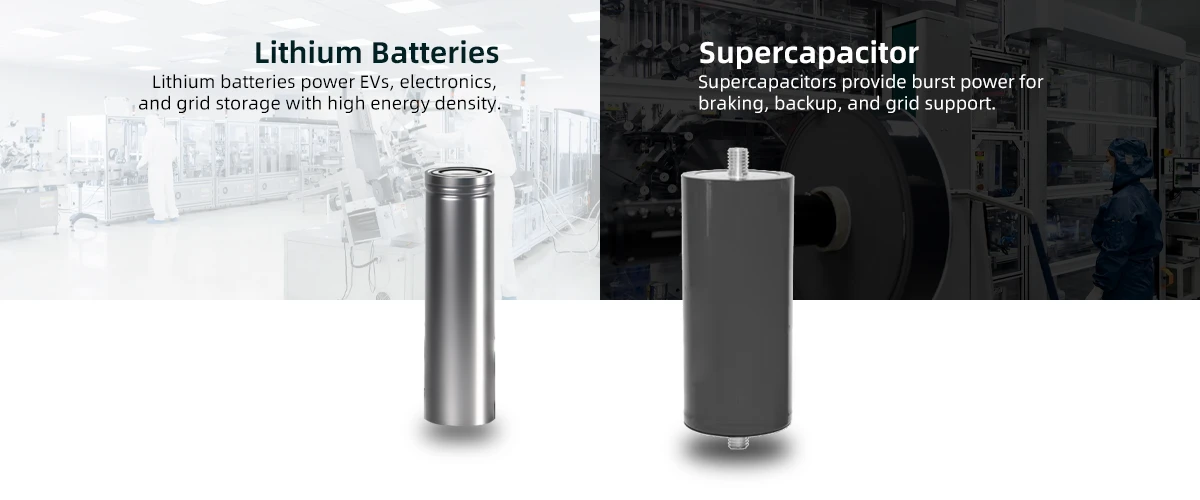
データは役割分担を明確に示しています。リチウムイオンはエネルギーを蓄えます。スーパーキャパシタは電力を供給します。リチウムイオンは数時間かけて放電します。スーパーキャパシタは数秒で放電します。リチウムイオンのコストは蓄えられるエネルギーによって決まります。スーパーキャパシタのコストは供給される電力によって決まります。
高いエネルギーと高い電力の両方を必要とするシステム(そして多くの産業システムがそうです)は、単一技術の問題ではなく、ハイブリッドアーキテクチャの問題です。
ハイブリッドシステムが投資回収を実現する3つの産業用途
スーパーキャパシタとバッテリーのハイブリッドシステムのビジネス上の価値は理論上のものではありません。それは、バッテリー交換サイクルの削減、システム停止時間の短縮、過剰な大型化の回避によって測定されます。
1. 電力網の周波数調整と電力品質
電力網運用者は、一次周波数調整において1秒未満の応答時間を必要とします。リチウムイオンバッテリーはこれを実現できますが、サイクル寿命という代償があります。周波数イベントが発生するたびにバッテリーはサイクル動作し、限られたサイクル寿命を消費します。
並列配置されたスーパーキャパシタバンクが高周波の電力スパイクを吸収します。バッテリーは持続的なエネルギー供給を担当します。その結果、バッテリーのサイクル寿命は3~5倍に延長され、10年間のシステム寿命における総所有コストは25~40%削減されます。
実証済みのシステム結果:100%バッテリー応答を、バッテリー80%/スーパーキャパシタ20%のハイブリッド構成に置き換えた10MW周波数調整設備では、バッテリー劣化率が1サイクルあたり0.045%から0.018%に低下したと報告されています。8年間の監視期間中、スーパーキャパシタの交換は不要でした。
2. クレーン、エレベーター、重機のエネルギー回収
吊り上げ作業では回生ブレーキエネルギーが発生します。そのエネルギーは、定格システム電力の3~5倍に達する5~15秒間のバーストとして供給されます。その電力を吸収できるサイズのバッテリーは、必要なエネルギー量に対して過大設計になります。
スーパーキャパシタバンクが制動エネルギーを取り込み、次回の吊り上げ動作のために放出します。バッテリーは基準電力を供給します。エネルギー消費量は20~35%低下します。バッテリーサイズは40~60%縮小できます。
エネルギー貯蔵統合用の設備を調達する購買チームにとって、これはバッテリーの初期投資コスト削減と、スーパーキャパシタの投資回収期間短縮につながります。
3. 無停電電源装置(UPS)のライドスルー
データセンターのUPSシステムは、電力網障害から発電機起動までの10~60秒間をつなぐ必要があります。鉛蓄電池は従来この役割を担ってきましたが、3~5年ごとの交換サイクルと温度感度によるコストが問題です。リチウムイオンはサイクル寿命を延長しますが、高レート放電下では依然として劣化します。
スーパーキャパシタモジュールは劣化なしでライドスルー電力を供給します。この用途ではサイクル寿命は実質的に無制限です。メンテナンスはほぼ不要です。バッテリーバンクは長時間停電時のみ対応するサイズまで縮小できます。
スーパーキャパシタセル製造:設備要件
スーパーキャパシタセルの製造プロセスは、電極コーティング、巻回または積層、電解液充填、封止など、表面的にはリチウムイオンバッテリーと類似していますが、材料構成、精度要件、品質管理ポイントは異なります。
EDLCスーパーキャパシタ製造の主要設備工程
|
工程 |
主要仕様 |
Li-Ion設備との違い |
|
電極コーティング機 |
アルミ箔上の活性炭スラリー;塗布量5~15 mg/cm² |
より高いコーティング厚みの均一性が必要;炭素スラリーのレオロジーはバッテリースラリーとは異なる |
|
電極カレンダー加工 |
圧縮密度0.5~0.8 g/cm³ |
バッテリー電極より大幅に低い密度目標;過度なカレンダー加工は細孔構造を破壊する |
|
巻回機 |
円筒型スーパーキャパシタ巻回;電極とセパレーターの位置合わせ±0.3 mm |
円筒型セルの電極幅は通常50~150 mm;薄いセパレーターを使用するため、セパレーターの取り扱いがより重要 |
|
電解液充填 |
アセトニトリルまたはプロピレンカーボネート系電解液;水分 |
電解液はLi-ionより揮発性が高い;充填にはより厳格な雰囲気制御が必要 |
|
セル封止および試験 |
漏れ試験、静電容量およびESR測定 |
主要な品質指標は電圧や容量ではなく、静電容量とESRである |
ターンキースーパーキャパシタ製造ライン設備メーカーは、粘度5,000 mPa·sまでの活性炭スラリーを処理できるコーティングステーションと、スーパーキャパシタで使用されるより薄く壊れやすいセパレーターに最適化された張力制御付き巻回機を供給しなければなりません。
実証済みの生産上の問題:標準的なリチウムイオン電極コーターを使用したスーパーキャパシタ製造ラインでは、セル間で±12%の静電容量ばらつきが発生しました。根本原因は、コーターのリザーバー内でスラリーが沈降したことによる活性炭塗布量の不均一でした。解決には、標準的なバッテリースラリー供給システムではなく、炭素スラリー向けに設計された攪拌式供給システムが必要でした。
スーパーキャパシタ対バッテリー:調達意思決定マトリクス
|
選定基準 |
スーパーキャパシタを選択 |
リチウムイオン電池を選択 |
ハイブリッドソリューション |
|
必要な放電時間 |
60秒未満 |
5分超 |
1秒から5分 |
|
必要なサイクル寿命 |
100,000サイクル超 |
5,000サイクル未満 |
混合デューティサイクル |
|
動作温度 |
ディレーティングなしで-40°C~+70°C |
-20°C~+60°C |
広い温度範囲で高いエネルギー需要 |
|
メンテナンス期間 |
最小限;10年間交換不要 |
3~10年ごとに交換 |
スーパーキャパシタが高頻度サイクルを処理;電池の交換頻度を低減 |
|
エネルギーコスト感度 |
電力供給が主な要件であれば、kWhあたりの高コストを許容可能 |
kWhあたりの低コストが重要 |
各技術を役割に応じてサイズ最適化し、コストを最適化 |
産業調達向けには、スーパーキャパシタセル組立装置サプライヤーが、これらのハイブリッド構成を実現するスーパーキャパシタセルを製造するための生産能力を提供できます。セルを直接調達するシステムインテグレーターにとって、ESRと静電容量許容差の指定は重要です—5%以上の静電容量変動を持つスーパーキャパシタセルは、直列ストリングでバランス問題を引き起こします。
システム設計の洞察:最も一般的なハイブリッド構成の設計ミスは、スーパーキャパシタバンクの容量不足です。システム設計者はピーク電力ではなく平均電力要件に基づいてスーパーキャパシタを選定することがよくあります。回生ブレーキや周波数調整では、10秒未満の時間でピーク電力が平均の5倍になる場合があります。平均電力向けにサイズ設定されたスーパーキャパシタバンクは、エネルギー回収サイクルが完了する前に完全放電し、バッテリーが残りの電力を吸収することになります—これはまさにハイブリッドシステムが回避するために設計された状態です。
よくある質問(FAQ)
Q: スーパーキャパシタは電気自動車のリチウムイオン電池を置き換えられますか?
A: いいえ。スーパーキャパシタは車両の航続距離に必要な持続的なエネルギーを供給できません。ハイブリッドシステムでは、回生ブレーキのエネルギー回収や加速アシストに使用され、高出力過渡状態を吸収することでバッテリー寿命を延ばします。
Q: 産業用途におけるスーパーキャパシタの一般的な寿命はどのくらいですか?
A: 10~15年です。定格電圧と温度の範囲内で動作させれば、劣化は最小限に抑えられます。スーパーキャパシタにはバッテリーと同等のサイクル寿命制限はなく、サイクル回数ではなくカレンダー劣化が寿命終了を決定します。
Q: 製造においてスーパーキャパシタセルはリチウムイオンセルとどのように異なりますか?
A: スーパーキャパシタ電極にはリチウム金属酸化物ではなく活性炭が使用されます。電解液は通常、炭酸エステル系ではなくアセトニトリル系です。耐湿性の許容範囲はより厳しくなっています(Liイオン電解液では10ppm未満に対し、5ppm未満)。装置はこれらの材料の違いに対応するよう設計する必要があります。
Q: なぜスーパーキャパシタは電池よりkWhあたりのコストが高いのですか?
A: スーパーキャパシタは化学的ではなく、物理的(電荷分離)にエネルギーを蓄積するためです。エネルギー密度は本質的に電極表面積と電解液の絶縁破壊電圧によって制限されます。その価値はエネルギー貯蔵コストではなく、電力供給能力とサイクル寿命にあります。
スーパーキャパシタセルの製造準備はできていますか?
スーパーキャパシタ市場はニッチな用途を超えて、主流の産業用エネルギー貯蔵分野へ拡大しています。この市場に参入するメーカーにとって、生産設備はスーパーキャパシタ材料とプロセス向けに専用設計されたものである必要があり、妥協を伴うバッテリー生産ラインの転用では対応できません。
TOB New Energyは、電極コーティングおよび巻回から電解液注入および試験まで、EDLCおよびハイブリッドコンデンサ技術向けに特別設計された完全なスーパーキャパシタセル生産ラインを供給しています。設備は中国・厦門の単一供給元工場で製造、組立、試験されています。スーパーキャパシタ生産ラインの仕様および工場直販価格をお問い合わせください。
この技術ガイドは、中国・厦門に拠点を置くリチウムイオン電池およびスーパーキャパシタ生産設備の直接メーカーであるTOB New Energyのプロセスエンジニアリングチームによって作成されました。設備は、研究室でのデモンストレーションではなく、産業用製造要件に合わせて設計および導入されています。
 購読する
購読する