へようこそ XIAMEN TOB NEW ENERGY TECHNOLOGY Co., LTD..
  • 日本語
  • Russian
  • f
  • i
  • y
  • t
  • p
battery machine and materials solution
Formation and Grading in Lithium-Ion Battery Manufacturing

Formation and Grading in Lithium-Ion Battery Manufacturing

Mar 24 , 2026

Formation and capacity grading are among the final and most critical stages in lithium-ion battery manufacturing. Although these steps occur after electrode fabrication and cell assembly, they strongly influence the electrochemical stability, safety performance, consistency, and lifetime of the final product. In industrial battery production lines, the formation process activates the battery for the first time, while the grading process evaluates and classifies the cells based on measurable electrical parameters.

From an engineering perspective, these operations are not simple charging and testing procedures. Each step — electrolyte filling, aging, formation, secondary filling, K-value evaluation, and capacity grading — is designed based on electrochemical mechanisms, mass transport behavior, gas evolution, and quality control requirements. In modern battery factories, the design of these processes must be integrated with the overall production line layout, equipment capability, and target performance specifications. For manufacturers building new facilities, these steps are typically implemented as part of a complete lithium battery production line solution, where formation systems, aging rooms, and grading machines are configured according to capacity and chemistry requirements.

This article provides a detailed engineering explanation of each step in the formation and capacity grading process, together with the physical and chemical reasons behind the operations.


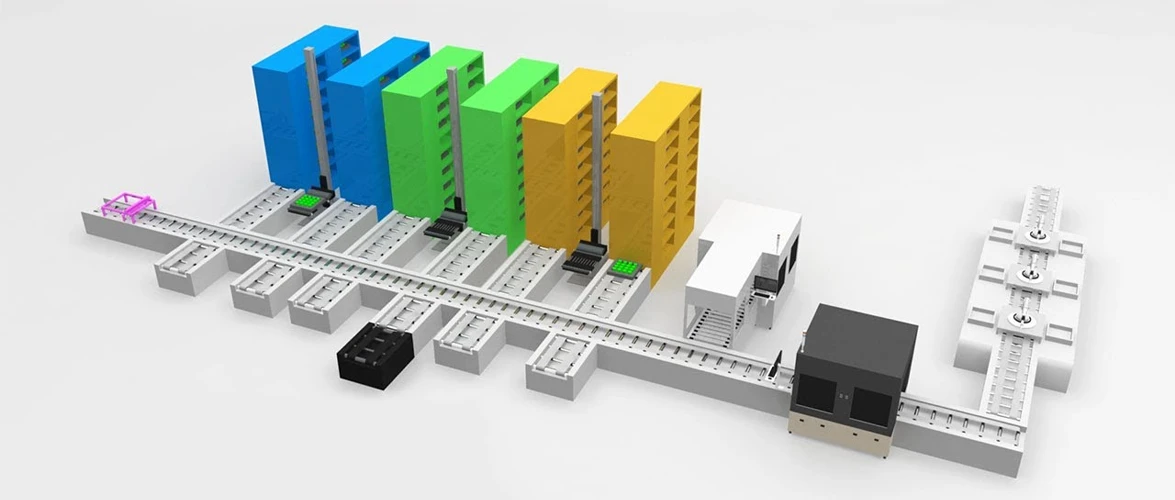
battery formation and grading system


1. First Electrolyte Filling After Cell Assembly


After the electrode stack or jelly-roll is inserted into the cell casing, the first electrolyte filling operation must be performed. In industrial terminology, this step is calledfirst filling, because a second filling will be required later in the process.

During the first filling, the assembled cell is placed in a vacuum filling chamber. The chamber is evacuated to create negative pressure inside the cell. Once the internal pressure is sufficiently low, the electrolyte valve is opened, and the electrolyte flows into the cell due to the pressure difference. This method ensures that the electrolyte penetrates into the separator pores and electrode structure more efficiently than simple atmospheric filling.

The purpose of the first filling is not only to introduce electrolyte, but also to ensure uniform wetting of porous electrodes. Poor wetting can lead to high internal resistance, non-uniform SEI formation, and capacity loss in later stages.


2. High-Temperature Aging for Electrolyte Wetting


Cells cannot be charged immediately after the first filling. Anyone who has worked with coin cells or laboratory cells knows that newly assembled batteries must rest for a period of time to allow the electrolyte to fully soak into the electrodes. In industrial production, this step is performed ashigh-temperature aging.

The cells are placed in a controlled high-temperature aging room for a specified period to accelerate electrolyte diffusion into the electrode pores. Proper wetting is essential for stable SEI formation during the subsequent formation process.

During aging, the cell is not yet permanently sealed. Therefore, a temporary sealing pin must be used to close the filling port. Without temporary sealing, high temperature may cause electrolyte evaporation, leading to concentration change, performance instability, and potential safety hazards.


Table 1 — Purpose of High-Temperature Aging

Parameter

Engineering Purpose

Effect on Battery

Elevated temperature

Increase electrolyte diffusion rate

Improves wetting uniformity

Rest time control

Ensure full penetration of electrodes

Reduces formation defects

Temporary sealing

Prevent electrolyte evaporation

Maintains electrolyte composition

Controlled environment

Avoid contamination

Improves consistency


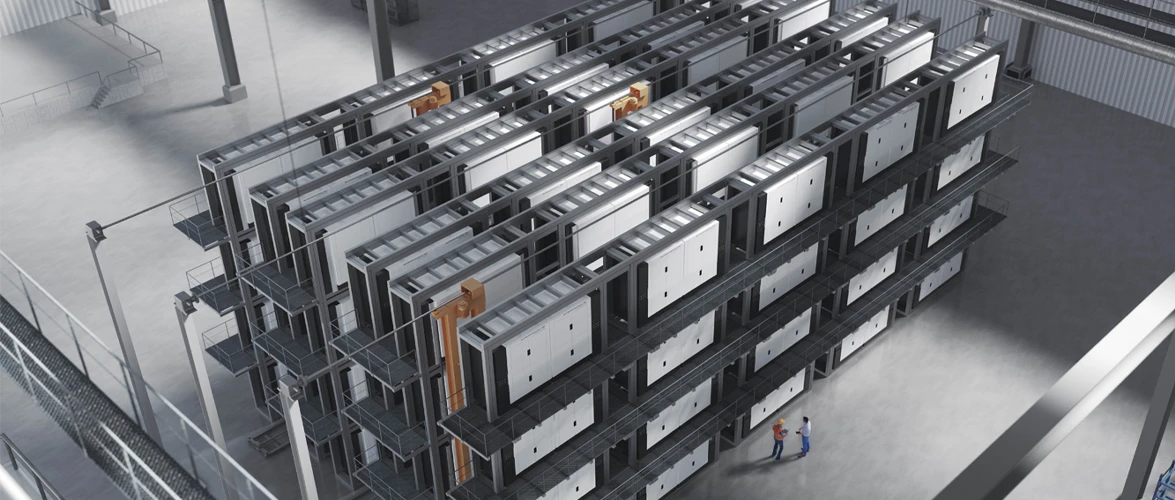
battery formation system


3. Formation Process and SEI Film Generation


After aging, the cells enter theformation process, which is the first electrochemical activation of the battery. The main objective of formation is to create a stablesolid electrolyte interphase (SEI)on the surface of the negative electrode.

During the first charge, the electrolyte decomposes at the graphite surface, forming a thin but dense SEI layer. This layer allows lithium ions to pass while preventing further electrolyte decomposition. The quality of the SEI film directly determines cycle life, internal resistance, and safety.

To obtain a high-quality SEI film, formation is usually performed using a multi-step current profile.

Step

Current Level

Purpose

Initial charge

Low current

Form dense SEI layer

Intermediate charge

Moderate current

Stabilize interface

Final charge

Higher current

Adapt to real working condition

Rest / discharge

Controlled

Check stability


Gas generation occurs during formation because electrolyte decomposition produces gases such as CO₂and hydrocarbons. To avoid gas accumulation at the electrode interface, industrial production often usesnegative-pressure formation, where gas is removed during the process.

Gas trapped between electrode layers can block lithium-ion transport paths, leading to non-uniform SEI formation and performance variation between cells.

In modern factories, formation systems are designed together with the
battery formation and grading equipment, ensuring precise current control, temperature stability, and gas management.


4. Secondary Electrolyte Filling


After formation, the cell undergoessecond electrolyte filling.

Two main reasons require this step:

- SEI formation consumes part of the electrolyte
- Negative-pressure formation removes some electrolyte together with gas

As a result, the electrolyte amount inside the cell becomes lower than the designed value. Secondary filling compensates for the loss and ensures correct electrolyte volume.

The operation is similar to the first filling, but the filling quantity is smaller. After the second filling, the filling port is welded to permanently seal the cell.


Table 2 — Comparison of First and Second Filling

Item

First Filling

Second Filling

Purpose

Initial wetting

Electrolyte compensation

Electrolyte volume

Full amount

Partial amount

Timing

After assembly

After formation

Sealing status

Temporary

Permanent after filling


5. OCV Measurement and High-Temperature K-Value Test


After sealing, the cell must undergotwo open-circuit voltage (OCV) measurementsbefore capacity grading.

The purpose is to calculate thehigh-temperature K-value, which describes the self-discharge rate of the battery.

The formula is:

K = (OCV1−OCV2) / (T2−T1)

Unit: mV/h

The cell is stored at elevated temperature between the two measurements. A large K-value indicates abnormal voltage drop, which may be caused by internal leakage, contamination, or micro-short circuits.

Cells with excessive K-value must be removed before grading.

Table 3 — Interpretation of High-Temperature K-Value

K-Value Level

Possible Cause

Action

Low

Normal self-discharge

Accept

Medium

Minor impurity

Monitor

High

Micro short circuit

Reject

Very high

Internal defect

Scrap


6. Capacity Grading (Formation Test Cycling)


Capacity grading is the process of charging and discharging the cell to measure capacity, internal resistance, and efficiency.

In industrial production, grading is usually performed at relatively high current (0.5C–1C) to simulate actual operating conditions.

Cells are then sorted into different grades according to measured capacity.

Example classification:

Grade

Capacity Range

Application

A

Highest capacity

High-performance pack

B

Standard

Normal products

C

Lower capacity

Secondary use

Reject

Out of spec

Scrap

Grading machines must provide accurate current control, temperature management, and high channel consistency, which is why they are normally integrated into a
battery pilot line or production line solution rather than used as standalone equipment.


7. Room-Temperature K-Value Test After Depolarization


After grading, the cells cannot be tested immediately again. The battery must rest at room temperature to allowdepolarization.

Right after charge and discharge, the voltage drops quickly due to relaxation of the electrode potential. If OCV is measured immediately, the calculated K-value will be artificially high.

Therefore, cells are stored for a period until voltage becomes stable, then a second K-value test is performed at room temperature.

This test further removes defective cells before shipment.


8. Final Release of Qualified Cells


After completing:

- First filling

- Aging

- Formation

- Second filling

- High-temperature K test

- Capacity grading

- Room-temperature K test

the cells can be released from the factory.

Although these steps occur at the end of the process, they determine whether the battery will meet its design specifications. Incomplete formation, poor wetting, insufficient electrolyte, or inaccurate grading will directly reduce cycle life and consistency.

For this reason, the formation and grading section is often the most power-consuming, time-consuming, and equipment-intensive part of a battery factory, and must be considered at the early stage of plant design.


About TOB NEW ENERGY


TOB NEW ENERGY is a global one-stop solution provider for battery manufacturing, covering laboratory research lines, pilot lines, and full-scale production lines. The company provides factory planning, equipment manufacturing, process integration, installation, commissioning, and technical training for lithium-ion, sodium-ion, solid-state, and next-generation battery technologies.

Learn more about complete solutions: TOB NEW ENERGY Battery Production Solutions

伝言を残す

    当社の製品に興味があり、詳細を知りたい場合は、ここにメッセージを残してください、できるだけ早く返信します。

ホーム

製品

会社